

Providing Verification to ensure Immigration Reporting is Compliant with your state laws.

About the National Reporting Certification Aid
NRCA helps counties comply with state and federal immigration reporting requirements related to the 287(g) Program. Through structured certification reviews and ongoing compliance support, NRCA assess local governments in meeting legal mandates, reducing risk, and protecting critical funding.
NRCA provides a clear, defensible framework for reporting, transparency, and accountability in jurisdictions with state-level immigration cooperation laws. Click Here to Read More
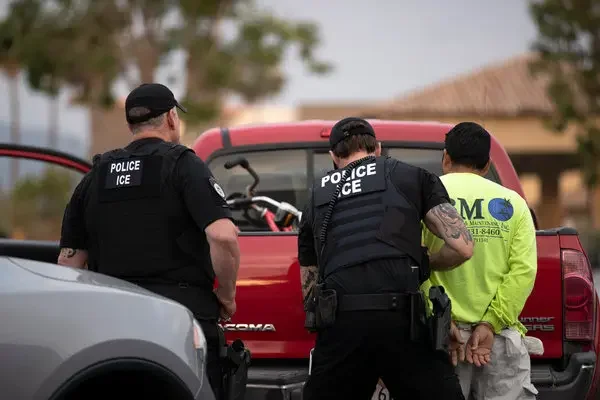
Providing Verification & Certification for state compliance in accordance with reporting under Section 287(g) of the Immigration and Nationality Act for County Jails, Prisons and all Law Enforcement Agencies.
We provide Certified verification documentation of your agency’s compliance in accordance with your state’s mandate.
-
Alabama's HB 7 (2025) requires county jails to verify the immigration status of detainees, collect fingerprints, and even DNA samples for foreign-born individuals processed through county facilities. The bill also mandates that these counties cooperate with federal authorities under the 287(g) program. This includes regular reporting on foreign-born inmates, which must be readily available to ICE upon request and accessible through public records laws. Additionally, enforcement bills signed by the governor reinforce these requirements and ensure that compliance with federal immigration laws is maintained at the local level.
-
Arizona's SB 1164, also known as the "Arizona ICE Act," mandates local law enforcement to fully cooperate with federal immigration authorities under the 287(g) program. Counties are required to track the immigration status of detainees and report on foreign-born inmates detained in local jails. These reports must be made available to ICE at any time and accessible through public records requests, ensuring transparency and compliance with federal immigration enforcement efforts.
-
In Arkansas, counties adopting 287(g) Memoranda of Agreement (MOA) with the U.S. Department of Corrections are required to track and report the immigration status of individuals processed through county jails. The state’s Department of Corrections plays a key role in overseeing this cooperation. Reports must be readily available to ICE upon request and accessible through public records laws, ensuring that counties comply with both state and federal immigration laws.
-
Florida has enacted past bills such as SB 1808 and HB 1355, which require county jails to enter into 287(g) agreements with ICE and report quarterly on foreign-born inmates. These reports, detailing detainees' immigration status, must be accessible to ICE upon request and available through open records requests. The ongoing monitoring ensures that local law enforcement agencies are aligned with both state and federal immigration enforcement requirements.
-
Under HB 1105, also known as the Georgia Criminal Alien Track & Report Act of 2024, county sheriffs are mandated to track and report the immigration status of individuals processed through county jails. The law requires these reports to be made available to ICE at any time and accessible to the public through open records requests. The bill emphasizes strict adherence to transparency and accountability, ensuring that local governments are held responsible for their cooperation with federal immigration enforcement.
-
Idaho has implemented actions through state agreements and press releases, including cooperation between Idaho State Police and ICE, along with the governor’s agreements under the 287(g) program. Local counties must track and report the immigration status of foreign-born detainees in county jails. These reports must be accessible to ICE upon request and made available through open records requests, ensuring that the state remains compliant with federal immigration enforcement policies.
-
Indiana's SB 76 (2025) and other proposals require county law enforcement agencies to comply with ICE detainers and establish jail standards related to detainers. Counties must track the immigration status of individuals processed through local jails and submit regular reports, which must be accessible to ICE and available through public records laws. This ensures local law enforcement’s compliance with federal immigration enforcement and detainer requests.
-
House Study Bill 187 (HSB 187, 2025) would have required Iowa law enforcement agencies to enter into written MOAs with ICE, specifically under the 287(g) jail enforcement model. Local law enforcement would be tasked with tracking and reporting the immigration status of individuals processed through county jails, with reports made available to ICE upon request and accessible through public records laws, ensuring compliance with federal immigration policies.
-
Kansas has passed bills such as HB 2587 that prohibit sanctuary policies and promote cooperation with ICE. The state continues efforts to deputize state law enforcement under the 287(g) program to assist in tracking and reporting the immigration status of foreign-born detainees. Reports detailing this information must be readily available to ICE and accessible via public records requests, ensuring that Kansas remains in compliance with federal immigration laws.
-
Louisiana’s Act No. 314 and related statutes regulate how local courts and jails handle immigration detainers, particularly for those detained under the 287(g) program. Counties must track and report the immigration status of detainees, and these reports must be accessible to ICE and available through open records requests. These measures ensure compliance with federal immigration enforcement laws and ensure transparency in the handling of foreign-born detainees.
-
Mississippi’s SB 2511 (2025), the "Mississippi Immigration Enforcement Act of 2025," establishes an enforcement unit and requires county detention facilities to enter into 287(g) agreements with ICE. Counties are tasked with tracking the immigration status of foreign-born detainees and reporting on these individuals regularly. These reports must be accessible to ICE and available through public records laws, ensuring transparency and accountability in the state’s immigration enforcement efforts.
-
Missouri’s executive actions and state initiatives in early 2025 expanded cooperation with ICE under the 287(g) program, including designating local law enforcement officers to enforce federal immigration laws. Although not a single bill, these initiatives require counties to track and report the immigration status of detainees, with reports accessible to ICE and available to the public through open records laws.
-
Montana’s HB 278 (2025) and related actions expand immigration status checks and detainer-related practices. The state has also enacted sanctuary-ban style laws that require counties to report the immigration status of foreign-born detainees. These reports must be accessible to ICE and the public via open records requests, ensuring that the state complies with federal immigration enforcement requirements.
-
House Bill 318 (H318, 2025), the "Criminal Illegal Alien Enforcement Act," expands sheriffs' duties to cooperate with ICE, honor detainers, and report on the immigration status of foreign-born detainees. Reports detailing detainee status must be available to ICE and the public through open records requests, ensuring that North Carolina is in full compliance with federal immigration laws.
-
North Dakota has passed legislation such as SB 2142 (in previous sessions) to create an Office of Legal Immigration, which helps enforce cooperation and reporting requirements. Local law enforcement must track and report the immigration status of detainees, with reports made available to ICE upon request and accessible through public records laws, ensuring transparency and compliance with federal immigration enforcement requirements.
-
HB 4156 (2024) and other recent bills expand cooperation between Oklahoma counties and ICE. Counties are required to track and report the immigration status of detainees, entering into 287(g) agreements with ICE. These reports must be accessible to ICE and available through open records requests, ensuring that local law enforcement remains compliant with federal immigration enforcement laws.
-
South Carolina bills such as H 5471 and H 3030 (2024–25) allow local agencies to enter into MOUs with federal agencies and require them to honor ICE detainers. Counties must track and report the immigration status of foreign-born detainees, with reports made available to ICE and accessible through public records requests, ensuring compliance with both state and federal immigration laws.
-
SB 1364 and related legislation in 2024 make it mandatory for local law enforcement agencies in Tennessee to cooperate with federal immigration authorities. Counties must track and report the immigration status of detainees in county jails, with these reports accessible to ICE and available via public records laws, ensuring full compliance with federal immigration enforcement policies.
-
Senate Bill 8 (SB 8, 2025) requires sheriffs in larger counties to enter into 287(g) agreements with ICE and includes provisions for grant funding to support compliance. Counties must track and report the immigration status of foreign-born detainees, and these reports must be readily available to ICE and accessible to the public via open records requests, ensuring Texas remains in compliance with federal immigration enforcement policies.
-
West Virginia has signed executive agreements and MOAs with ICE to expand cooperation under the 287(g) program. These agreements mandate that counties track and report the immigration status of detainees, with these reports accessible to ICE and available through public records laws, ensuring full cooperation with federal immigration enforcement policies.
Why were we billed?
In recent months, the Department of Homeland Security (DHS) has implemented significant departmental reductions and budget cuts. As a result, DHS no longer provides direct support for maintaining immigration statistics—yet county jails are still federally required to track, report, and retain detailed Criminal Alien detainee data, including bookings, Law Enforcement Support (LES) contact, immigration holds, and immigration transfers.
National Reporting Certification Aid (NRCA) was established to help bridge this gap.
NRCA provides a premier compliance support program designed to assist county jails with the accurate maintenance, review, and verification of this required data through structured monthly, quarterly, and annual reporting processes. Our services help ensure jurisdictions remain compliant, organized, and prepared to meet ongoing state and federal reporting obligations.
What exactly does the NRCA do for all county jails?
Recent state immigration-enforcement measures—including Georgia’s HB 1105; ICE Memoranda of Agreement (MOAs) under the 287(g) program; Texas SB 8 (2025); Tennessee SB 1364; South Carolina H 5471 and H 3030; Oklahoma HB 4156; North Dakota SB 2142; North Carolina HB 318; Montana HB 278; and Alabama SB 53, SB 63—share a common framework: they mandate or strongly incentivize cooperation between state and local law enforcement agencies and U.S. Immigration and Customs Enforcement (ICE), particularly at the jail and detention level. These laws require immigration status verification during lawful detention or booking, participation in 287(g) or warrant service programs, notification to ICE, and the generation of reports subject to public-records laws.
Congress formally authorized the 287(g) program through legislation passed by both the U.S. House and Senate and signed by the President, delegating limited federal immigration enforcement authority to trained state and local officers. While Congress created the program, its implementation, operational standards, training requirements, and compliance obligations are governed by the Executive Branch through the Department of Homeland Security and ICE.
In this environment, the National Reporting Certification Aid (NRCA) verification process is imperative. As states increasingly condition funding, liability protections, and statutory compliance on documented cooperation with ICE, NRCA provides an independent, standardized mechanism to verify that county jails are properly implementing 287(g) authorities, maintaining required MOAs, conducting lawful status inquiries, generating mandated reports, and preserving records in accordance with state open-records laws. NRCA certification helps ensure that local jurisdictions are not merely claiming compliance, but are demonstrably meeting both state statutory mandates and federally prescribed ICE procedures—protecting counties from enforcement gaps, audit failures, and legal exposure while promoting transparency and accountability for the public and federal partners alike.
Contact Us